Looking for a compact 20 gallon nano reef tank that fits your space and hobby goals? This guide highlights five suitable options and explains who each is best for. Whether you’re a beginner building a delicate coral display or a seasoned hobbyist seeking a low-maintenance reef, these nano tanks offer integrated filtration, LED lighting, and convenient features to support healthy marine life in a compact footprint.
Summary table of chosen products:
| Product | Best For | Why It Stands Out |
|---|---|---|
| Coralife BioCube Nano Tank | Beginners & small reef starters | All-in-one design with built-in filtration and customizable LED lighting. |
| Coospider 20 Gallon Glass Tank | Easy maintenance & self-cleaning setups | 3-color LED lighting, built-in temperature monitoring, quiet pump. |
| LANDEN 45P 15 Gallon Ultra-Clear | Glassy look with rear filtration | Integrated rear filtration spaces; high-clarity glass. |
| Coralland 8-Gallon Saltwater Tank | Ultra-clear viewing & compact reef display | Low-iron glass for crystal clarity and 45° joints. |
| hygger Nano Reef LED Light | Lighting-focused upgrade | PAR-optimized for soft corals; adjustable spectrum. |
Coralife BioCube, Aquarium Kit, 16–20 Gallon Nano Tank
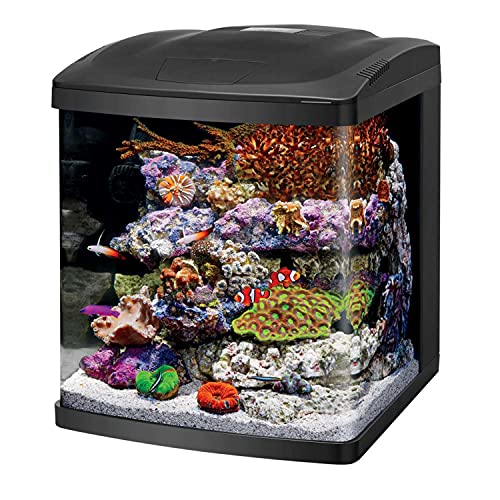
The Coralife BioCube is designed as an all-in-one nano reef starter. It combines a compact, rounded-edge glass design with a built-in filtration chamber and a quiet submersible pump. Best for beginners or hobbyists who want a ready-to-use reef or freshwater system with flexible compatibility for BioCube accessories. Consider this if you prefer a self-contained setup with minimal add-ons, but be aware that tanks and decor are sold separately.
Coospider 20 Gallon Glass Tank Starter Kit

The Coospider kit focuses on simplicity and temperature stability with a real-time temperature sensor and a quiet 3-in-1 pump for filtration, oxygenation, and water movement. Best for Betta communities, shrimp, and small reef setups where low maintenance is important. Choose this if you want a self-contained system with color-LED lighting for enhanced aesthetics, but monitor the algae growth weekly to maintain balance.
LANDEN 45P 15 Gallon Ultra-Clear Glass Tank

This Landen model features an integrated rear filtration chamber designed to separate filter media and optionally house a skimmer. Best for freshwater or saltwater layouts where backshelf filtration keeps the display pristine. It offers high-clarity glass and a rimless look for a modern reef or freshwater setup. A caveat is that rear filtration may require careful media placement to optimize flow.
Coralland 8-Gallon Saltwater Aquarium

Coralland emphasizes ultra-clear viewing with low-iron glass and a 45° angled joint design. Best for compact marine displays, desktop reef setups, or starter tanks to showcase small corals and fish. The 8-gallon size supports a modest bioload, but plan for careful stocking to avoid overloading the filtration system.
hygger 20W Nano Reef Light

The hygger 20W nano reef light is designed for 5–15 gallon tanks and provides a full spectrum with a blue-white balance. Best for soft corals and dynamic color enhancement in compact reefs. Use this as a complementary upgrade to boost coral fluorescence. A limitation is that higher-intensity setups may require additional cooling or heat management in small tanks.
LANDEN EzCube 45K Rimless AIO Marine Tank
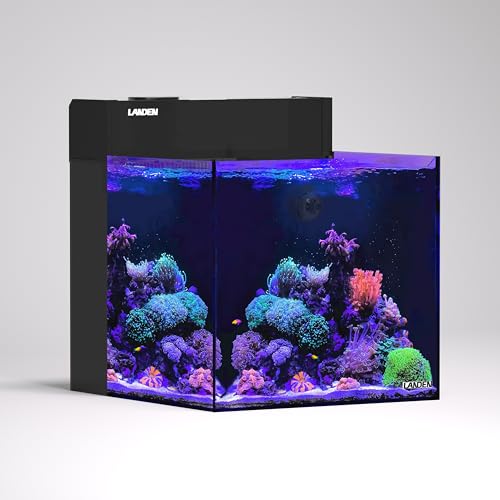
The EzCube 45K is a 14.5-gallon rimless AIO reef system with an integrated rear filtration panel and a built-in AquaClean AC150 protein skimmer. Best for hobbyists who want a compact yet high-performance reef setup with advanced filtration in a single unit. Choose this if you need a self-contained system with predictable nutrient control, but be prepared for a slightly larger footprint than some 8–15 gallon options.
Buying Guide: Key Considerations For Your 20 Gallon Nano Reef Tank
- Tank size and footprint: Decide whether you want a true 20-gallon display or a compact 15–16 gallon model with similar capabilities. Consider available space and stand compatibility.
- Filtration design: Rear or integrated filtration affects maintenance and aesthetics. Tanks with multi-chamber filtration provide flexibility for media choices and protein skimmers.
- Lighting needs: Reef safety and coral growth depend on appropriate PAR and spectrum. For soft corals, balanced blue/white light is often sufficient; for SPS/LPS, higher PAR and spectrum control may be required.
- Temperature and stability: Built-in temperature monitoring helps maintain stable water conditions, especially in smaller volumes where fluctuations are common.
- Glass quality: Low-iron, ultra-clear glass improves viewing clarity and overall appearance. Rimless designs offer a modern look but may require careful handling.
- Maintenance and upgrades: Look for compatibility with accessories (filters, media, pumps) to tailor the system to your experience level and goals.
- Bioload planning: Smaller tanks require careful stocking to prevent nutrient buildup and water quality deterioration. Start with hardy, smaller specimens and observe biofilter capacity.
Frequently Asked Questions
- What is the best nano reef tank for beginners? The Coralife BioCube and similar all-in-one kits are often recommended for beginners due to built-in filtration and simple setup.
- Do I need a separate protein skimmer for a 20-gallon reef? Some all-in-one systems include a compatible skimmer or can be upgraded; others may perform well with integrated rear filtration if stocked conservatively.
- What lighting is essential for soft corals in a 20-gallon nano reef? A full-spectrum or blue-biased LED that delivers adequate PAR is typically sufficient for soft corals, ricordea, and zoanthids.
- Can I keep a small SPS coral in a 20-gallon nano reef? Yes, but it requires precise water quality, stable temperature, strong light, and careful feeding; monitor Params closely.
- Is rear filtration better than inline filtration for nano tanks? Rear filtration saves display space and reduces visible equipment, but requires thoughtful media placement to optimize flow and cleaning.
- What should I consider when upgrading lighting? Ensure the fixture provides the right PAR range, spectrum, and coverage for your tank size and coral types; avoid light spill on adjacent shelves or housings.