Best Aquarium Nitrate Test Kit Recommendations for Precise Water Management
Choosing an Aquarium Nitrate Test Kit helps ensure your fish stay healthy by detecting elevated nitrate levels that can harm aquatic life and plant growth. This guide highlights top options for hobbyists, with clear, objective reasoning for who each kit is best for. Whether you maintain freshwater tanks, reef setups, or ponds, there’s a nitrate test solution tailored to your needs. The table below provides a quick comparison of five well-regarded kits.
| Product | Best For | Key Benefit | Notes |
|---|---|---|---|
| API Nitrate 90-Test | Midsized freshwater or saltwater tanks | Simple 90-test kit to monitor nitrate from 0–160 ppm | Good balance of quantity and clarity |
| Salifert Nitrate (No3) Test Kit | Reefers and precise hobbyists | Low-detection precision down to 0.2 ppm | Premium liquid chemistry format |
| Hanna Instruments HI782 | Quick on-site checks | High accuracy with a single-button operation | Digital readout for easy interpretation |
| SJ WAVE 11 in 1 Test Strips | Low-maintenance multi-parameter monitoring | 11 parameters including nitrate, all in one strip | Fast results; ideal for quick checks |
| AAwipes 8-in-1 Test Strips (K02-50) | Budget-friendly, everyday monitoring | 8-in-1 strips with broad parameter coverage | Great value; color-chart readability is essential |
API Nitrate 90-Test Freshwater and Saltwater Aquarium Water Test Kit
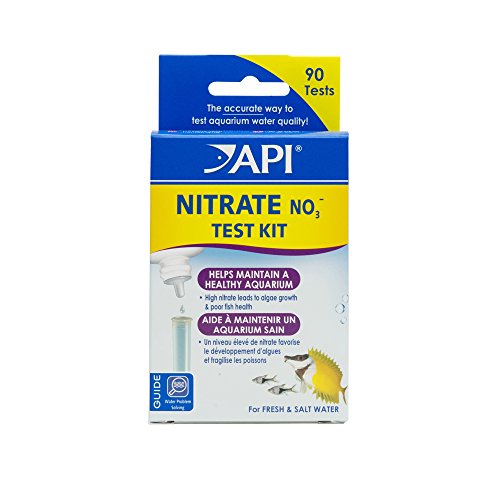
The API Nitrate 90-Test kit is designed to help monitor and adjust nitrate levels in both freshwater and saltwater setups. It includes two bottles of testing solution, two color cards, and one test tube with cap, making it straightforward to perform multiple tests over time. This kit is best for hobbyists who want a simple, reliable method to detect nitrates across a broad range (0–160 ppm) and prevent invisible water problems that can stress fish and upset biological balance. Consider this kit if you maintain mid-sized tanks and prefer a familiar API format.
Best for: Intermediate aquarists who want a proven, straightforward nitrate test that’s widely supported and easy to use.
Caution: The kit’s range is broad, but readings near the upper end require careful interpretation to avoid misreading high nitrate spikes during maintenance or feeding cycles.
Salifert Nitrate (No3) Test Kit
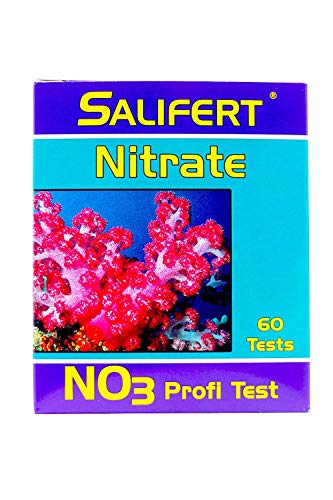
The Salifert Nitrate Test Kit is a premium option known for precise measurements, crucial for reef tanks and sensitive fish species. It detects nitrate levels as low as 0.2 ppm and uses a liquid-based testing approach. This kit is best for advanced hobbyists who require high precision and a trusted brand for long-term water quality monitoring in reef or fish-only aquariums. It is not as quick as strip-based methods but offers superior sensitivity for critical applications.
Best for: Reef aquarists and serious hobbyists needing accurate low-range nitrate readings.
Limitation: Requires careful handling of liquid reagents and precise timing for optimal results.
Hanna Instruments High Range Nitrate Checker HI782

The Hanna HI782 nitrate checker offers a compact, digital approach to nitrate measurement. It emphasizes ease of use with a single-button operation and a large LCD screen, delivering quick nitrate readings suitable for on-the-spot checks in freshwater, saltwater, or nano tanks. This device is best for hobbyists who value speed and clarity and want a portable option for spot checks or education demonstrations. It may be more expensive upfront than test strips but saves time with digital readouts.
Best for: Tank owners who want fast, readable digital results and a portable nitrate solution.
Limitation: Typically higher initial cost and ongoing supply considerations for replacement reagents or calibration.
SJ WAVE 11 in 1 Aquarium Test Strips

The 11-in-1 test strips by SJ WAVE cover ammonia, pH, nitrate, nitrite, total hardness, carbonate, total alkalinity, copper, iron, chlorine, and temperature. The kit is designed for quick, “in-home” testing with color charts for instant interpretation. It is best for hobbyists who want a broad, all-in-one monitoring solution without frequent re-testing of reagents. The primary nitrate reading is convenient, but the broader panel means color interpretation matters to avoid misreads from cross-parameter changes.
Best for: Busy aquarists who prefer a comprehensive at-a-glance kit and quick guidance on actionable steps.
Limitation: Strips can be less precise than liquid tests, and color matching can vary by lighting and perception.
AAwipes 8-in-1 Aquarium Test Strips (K02-50)

The AAwipes 8-in-1 strips provide a broad panel, including nitrate, nitrite, pH, alkalinity, hardness, chlorine, free chlorine, and ammonia. This kit is particularly attractive for budget-conscious buyers who want a straightforward, user-friendly option for frequent testing across freshwater and ponds. Recommended for routine monitoring rather than ultra-precise measurements. Use this kit if you test often and want to minimize costs per test.
Best for: Beginners and casual hobbyists seeking value and broad coverage.
Limitation: Color-interpretation consistency is key; accuracy can vary with lighting and user perception.
Buying Guide: Key Purchase Considerations
What type of tester suits your tank?
Liquid reagent kits (like API and Salifert) generally offer higher accuracy at low nitrate concentrations, which is important for reef setups or sensitive freshwater tanks. Strips (like SJ WAVE or AAwipes) are quicker and cheaper per test, ideal for beginners or busy hobbyists who perform frequent checks.
How important is low-range accuracy?
For reef aquariums and heavily stocked freshwater tanks, detecting low nitrate levels (below 5 ppm) is crucial. In such cases, premium liquid tests (Salifert) or digital readers (Hanna HI782) can provide the most reliable results.
Do you need multi-parameter tests?
Multi-parameter strips simplify routine monitoring by providing nitrate alongside other parameters in a single strip. If you value convenience over ultra-precision, options like SJ WAVE or AAwipes are advantageous.
Digital vs. colorimetric readings
Digital meters (Hanna HI782) reduce subjectivity in color matching, which can be helpful in rooms with tricky lighting. Color charts on strips are fast but can be influenced by lighting conditions. Consider your environment and comfort with interpreting color scales.
Cost and replacement needs
Strips tend to be cheaper upfront and more cost-effective for frequent testing, but may require more frequent replacements. Liquid kits often cost more initially but can offer longer shelf life and higher precision. Evaluate long-term test frequency to estimate ongoing costs.
FAQ
- How often should I test nitrate in a standard home aquarium?
Best practice is to test at least twice a week for most setups, especially after water changes, feeding changes, or livestock additions. More frequent testing helps catch spikes early.
- What nitrate level is considered safe for most tanks?
Most freshwater community tanks aim to keep nitrate below 20 ppm, while reef systems often target below 5 ppm. Always consider your specific livestock and plant needs.
- Are nitrate test strips trustworthy?
Test strips provide quick, convenient results. For critical setups, confirm with a liquid test or digital meter to ensure accuracy at low concentrations.
- Which kit is easiest for beginners?
Strips like SJ WAVE or AAwipes offer simple procedures and quick readings, making them a good starting point for beginners and casual hobbyists.
- Should I use a digital nitrate checker?
Digital readers like the Hanna HI782 provide fast, easy-to-read results and are useful for spot checks. They are generally more expensive but reduce interpretation errors due to color matching.
- Can I rely on one test kit for all parameters?
For broad water quality needs, multi-parameter strips are convenient. For precise nitrate readings, supplement with a dedicated nitrate test kit from API or Salifert.