Choosing the right sump filter media helps mechanical, biological, and chemical filtration work together for crystal-clear water. This guide highlights five top options, showing who each product is best for and why it fits a modern backyard or planted aquarium setup. Whether you run a freshwater, saltwater, or pond system, these media choices support efficient filtration, longer intervals between cleanings, and better overall tank stability.
Reefing Art Ceramic Bio Filter Media – Vast Surface Area
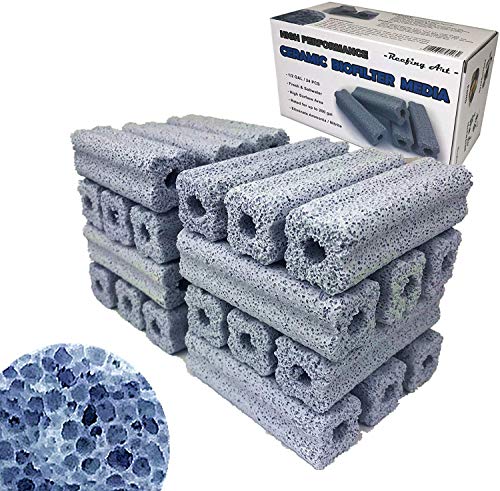
Product overview: This ceramic media comes in a box of 24 pieces, each half-gallon per box, designed to increase biofiltration efficiency with a porous internal structure and vast surface area. It targets ammonia and nitrite removal and suits freshwater, pond, and saltwater tanks alike.
- Best for: Medium to large sumps needing robust biological filtration and quick ammonia/nitrite reduction.
- Why it’s selected: The vast surface area supports colonies of beneficial bacteria, promoting a stable nitrogen cycle in mixed-species tanks.
- Limitations: Some aquarists may want to pair with physical media for immediate debris capture, as ceramic media focuses on biofiltration.
Aquatic Experts Bonded Filter Pad – Bulk Roll

Product overview: This blue and white bonded filter pad comes as a 12″ x 72″ roll with 3/4″ thickness, cut-to-fit for most filters. It traps debris while promoting water flow to reduce premature clogging, and is compatible with freshwater, saltwater, canister, sumps, wetlands, and aquaponics setups.
- Best for: Hobbyists who want a versatile, cut-to-fit media that doubles as a prefilter in multiple filter configurations.
- Why it’s selected: It offers durability and easy customization, helping to extend filter life and maintain clarity through mechanical filtration.
- Limitations: It’s a prefilter solution; for strong chemical filtration, consider pairing with carbon or phosphate removers as appropriate.
AQUANEAT Bio Sponge Filter Media Pad Set

Product overview: Each set includes three foams—coarse, medium, and fine—designed to trap both large and tiny particles and support both mechanical and biological filtration. The triple-density design enhances filtration efficiency and can be cut to fit a wide range of filters and configurations.
- Best for: Tanks needing immediate mechanical deburring and a baseline biological surface.
- Why it’s selected: The multi-density approach yields versatile cleaning power from coarse to fine particle capture, improving water clarity when used in sumps or canisters.
- Limitations: Some setups may require additional media to address chemical filtration for certain water conditions.
ALEGI Sponge Filter Pad – Cut-to-Size

Product overview: This cut-to-size bio filter media pad is designed for fish tanks, sumps, and ponds, available in 20″ x 20″ x 1″ with 20 PPI. It offers high-density sponge filtration with durability and easy customization.
- Best for: Sumps and DIY setups where you need a sturdy, reusable sponge that’s easy to trim to fit odd-shaped chambers.
- Why it’s selected: Durable material and tight density support reliable mechanical filtration and long-term reuse when cleaned properly.
- Limitations: Large sheets may be less convenient for small, tight sumps unless carefully trimmed.
hygger 1-Inch Thick Filter Floss Roll

Product overview: A 12″ x 68″ roll of micro-fine polyester filter floss, 1″ thick, designed for flexible cutting to fit any filter type. It combines mechanical filtration with easy-to-trim customization for sumps, canisters, or HOB filters.
- Best for: Aquariums needing fast soil-based debris removal with straightforward fit for multiple filter styles.
- Why it’s selected: Superior particle capture improves water clarity and supports healthier fish by reducing dissolved organic matter load.
- Limitations: Purely mechanical filtration; consider pairing with a bio-media for complete filtration.
Buying Guide: Key Filtration Considerations
- Tank type and size: Larger tanks may require media with high surface area (biological filtration) and robust mechanical media for quick debris removal.
- Filtration goals: If you need faster nitrification, prioritize media with large surface area and porosity. For crystal-clear water, combine mechanical media with bio-media.
- Filter compatibility: Ensure media thickness and dimensions fit your sump, canister, or HOB setup. Cut-to-fit options help in diverse configurations.
- Maintenance: Reusability and ease of cleaning impact long-term costs and tank stability. Media that’s easy to rinse without losing structural integrity is preferable.
- Water chemistry considerations: Some media are better for freshwater, others for reef or saltwater systems. Pair with chemical media (activated carbon, phosphate removers) as needed.
- Durability and reuse: Durable sponge and ceramic media resist deformation and offer longer service life when properly maintained.
Quick Comparison At A Glance
| Product | Best For | Primary Benefit | Limitation |
|---|---|---|---|
| Reefing Art Ceramic Bio Filter Media | Medium-Large sumps | High biofiltration due to large surface area | Primarily biofiltration; may need mechanical media |
| Aquatic Experts Filter Pad | Flexible, cut-to-fit setups | Great debris capture and open flow | Pre-filter role; add chemical media if needed |
| AQUANEAT Bio Sponge Pad | All-in-one mechanical + bio | Triple-density filtration | May require chemical media for certain contaminants |
| ALEGI Sponge Pad | DIY sumps and custom filters | Durable, reusable sponge | Size can be challenging in tight spaces |
| hygger Filter Floss | Any filter style needing fine debris removal | Excellent particle capture | Purely mechanical filtration |
FAQ
- How do I choose the right media for a sump? Consider whether you need stronger biofiltration (ceramic or sponge with high surface area) or superior mechanical filtration (thicker floss or bonded pads). Pair with chemical media if needed.
- Can I reuse filter media? Many sponge and ceramic media can be rinsed and reused. Follow manufacturer guidance to avoid damaging the media’s pore structure.
- Is cut-to-fit media better than pre-cut? Cut-to-fit offers flexibility for unusual sump sizes, reducing gaps where debris can accumulate. Pre-cut options are convenient for standard configurations.
- How often should I replace media? It depends on tank bioload and maintenance. Check for compressed pores, tearing, or discolored areas that indicate reduced filtration efficiency.
- Should I mix media types? Yes. A combination of mechanical, biological, and, if needed, chemical filtration tends to deliver clearer water and healthier aquatic life.
- Are these media suitable for both freshwater and saltwater? Most options work in freshwater and saltwater setups. Verify any saltwater-specific recommendations from the manufacturer.