Best Low Light Aquarium Plant Package for Easy, Stunning Tanks
Answer: For beginner-friendly setups that thrive in low light, choose a curated package of hardy live plants that require minimal maintenance. The top picks below are ideal for novice aquarists seeking natural filtration, vibrant foliage, and easy decor in freshwater tanks. The buyer types these suits best include beginners starting a planted tank, shoppers prioritizing low maintenance, and hobbyists wanting immediate greenery without complicated lighting. The quick-reference table highlights each option and its key strengths.
| Product | Best For | |
|---|---|---|
| CANTON AQUATICS Low Light Aquatic Plant Set | Beginner tanks that need instant variety | 6 diverse bunches, natural filtration |
| Live Aquarium Plants Variety Pack – Nursery’s Choice | Low to medium light tanks | Assorted hardy plants, no CO₂ required |
| Java Fern Microsorum Pteropus | Low maintenance decor on driftwood/rocks | Buy 2 Get 1, robust in low light |
| Java Fern and Anubias Bundle | Flexible placements, beginner-friendly | Non-toxic, attaches to hardscapes |
| Water Spangle (Salvinia Minima) | Floating plant for surface coverage | Low light, easy to care for |
CANTON AQUATICS Low Light Plant Set
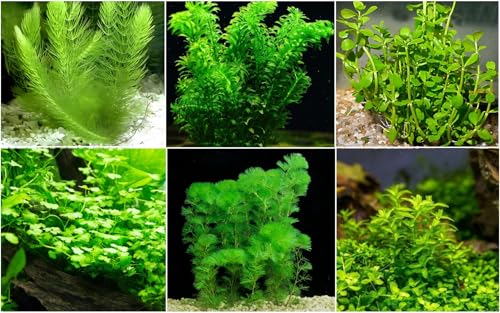
The Canton Aquatics package delivers six diverse low-light bunches, offering height variation, texture, and visual depth. Best for beginners who want immediate greenery and natural aesthetics without extra care. The set also supports a healthier ecosystem by providing biological filtration and nutrient uptake for a more stable tank. Suitable for freshwater aquariums aiming for a lush backdrop and varied foreground interest.
Best for: novices seeking a ready-to-install plant design with natural filtration. Limitation: since multiple species are included, growth rates may vary and some pruning may be needed to maintain balance.
Live Aquarium Plants Variety Pack – Nursery’s Choice

This beginner-friendly pack includes an assorted mix of hardy low-maintenance aquatic plants, curated by growers. It thrives under low to medium light and requires no CO₂ or fancy substrate. Safe for most freshwater setups, including betta and community tanks. The variety supports foreground to midground density and can jump-start a natural aquascape with minimal effort.
Best for: investors who want a diverse, low-maintenance starter collection. Limitation: as an assortment, exact plant species and proportions may vary between shipments.
Java Fern Microsorum Pteropus

Java Fern is a classic low-light favorite. This listing features a typical plant size range of 5–12 inches, often around 9 inches, with variability due to growing conditions. It’s ideal for attaching to driftwood or rocks, enhancing natural aquascapes without requiring substrate rooting. Best for: tanks needing a hardy, attachable focal plant. Caution: avoid burying rhizomes in substrate, which can cause rot.
Amazon Sword – Echinodorus Bleheri x3

In this trio, Echinodorus bleheri adapts to lower light compared with other sword plants, growing up to 20–50 cm with proper trimming. It benefits from a nutritious bottom substrate but can tolerate dim conditions with lights not on high. Best for: larger tanks seeking a tall, dramatic background plant. Limitation: needs regular pruning to prevent shading lower plants.
Java Fern and Anubias Bundle

This bundle combines Java Fern and Anubias, two stalwarts of low-maintenance aquascapes. They require minimal CO₂, thrive in low to medium light, and attach easily to driftwood or rocks. Best for: beginners who want flexible placement and quick greenery. Caution: ensure not to bury rhizomes; let rhizomes rest on surfaces for best growth.
Water Spangle (Salvinia Minima)

Water Spangle is a floating plant ideal for surface coverage and shade for lower zones. It tolerates low light and helps with surface tension and nutrient uptake. Best for: adding a floating element to reduce light intensity at the substrate. Limitation: floating plants can overgrow if not pruned periodically, potentially blocking light from bottom dwellers.
Buying Guide
- Light and placement: For low-light tanks, prioritize plants that tolerate shade or attach to hardscapes rather than rooting deeply. Look for wording like “low light,” “attach to driftwood,” or “no CO₂ required.”
- Maintenance needs: Choose species known for easy care and slow growth if you prefer less trimming. Avoid plants that demand specialized substrates or CO₂ systems.
- Tank size compatibility: Ensure plant height and spread fit your aquarium dimensions. Tall background options pair well with shorter foreground plants to create depth.
- Floating vs. bottom-dwelling: Floating plants (like Water Spangle) provide surface shading and help control algal blooms, while rooted specimens establish structure at the substrate.
- Species balance: A mix of ferns, Anubias, and sword varieties can achieve a balanced look without requiring strenuous care. Consider a combination of midground and background options for visual interest.
Frequently Asked Questions
- What makes a plant suitable for low-light aquariums?
– Plants that naturally tolerate shade, do not require CO₂ enhancement, and can thrive with ambient aquarium lighting are suitable for low-light setups. - Do I need to prune these plants regularly?
– Most hardy low-light plants benefit from light trimming to maintain shape and prevent shading of shorter foreground plants. - Are floating plants good for beginners?
– Yes. Floating species like Water Spangle help manage light levels at the substrate and add surface texture, but require periodic thinning. - Can these plants improve water quality?
– Live plants contribute to nutrient uptake and biological filtration, helping stabilize water quality when combined with proper tank maintenance. - Will these packages fit all freshwater tanks?
– They fit a wide range of small to medium freshwater tanks; check final height and growth expectations to plan layout. - What if my shipping temperature is extreme?
– Some listings note temperature-related restrictions; ensure compatibility with your local climate or prefer shipments with temperature controls.