Best Oak Leaves for Aquarium Use and Aquatic Habitat Enhancement
Choosing the best oak leaves for aquarium can greatly enhance your aquatic environment by providing natural water conditioners, hiding places, and food sources for microfauna. Oak leaves help maintain proper water chemistry, simulate natural habitats, and support a healthy ecosystem in your aquarium or terrarium. Below is a comparison table of top-quality oak and similar leaf products designed for aquarium and reptile use.
| Product | Brand | Key Features | Amazon Link |
|---|---|---|---|
| XYZReptiles Premium Live Oak Leaf Litter | XYZReptiles | Chemical-free, bioactive substrate catalyst, microfauna food source | View on Amazon |
| MAQIHAN Dry Oak Leaf Litter | MAQIHAN | Dried untreated oak leaves, humidity control, microfauna habitat | View on Amazon |
| Premium Indian Almond Leave – MATCHIMAA | MATCHIMAA | Rich in tannin, pH adjustment, stress reduction for fish and shrimp | View on Amazon |
| SunGrow Catappa Indian Almond Leaves (50 pcs) | SunGrow | Breeding aid, water conditioner, benefits diverse aquatic species | View on Amazon |
| MAQIHAN Longan Leaf Litter | MAQIHAN | Natural leaf litter, tannins release, stress reduction for reptiles | View on Amazon |
XYZReptiles Premium Live Oak Leaf Litter for Bioactive Terrariums

This oak leaf litter is chemical-free and safe for amphibians, reptiles, and aquatic microfauna. It is sourced and processed in the USA with heat treatment exceeding 110°F to ensure safety. The leaves act as catalysts in bioactive environments by creating natural shelter and hiding spots, while enriching substrates with nutrients as they decompose. Additionally, they serve as an excellent food source for microfauna such as isopods and springtails, supporting a robust ecosystem within your aquarium or terrarium.
MAQIHAN Dry Oak Leaf Litter for Reptiles and Aquarium Habitats
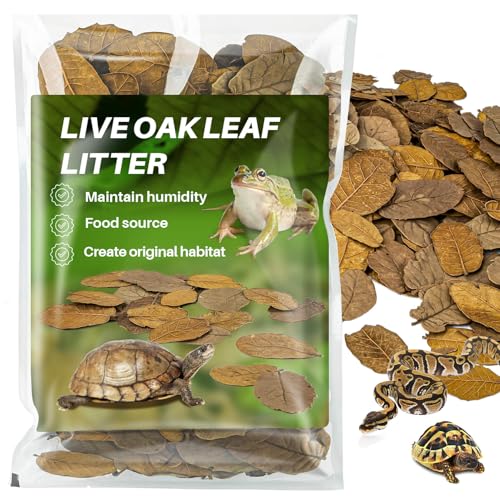
These untreated dry oak leaves offer a natural habitat for reptiles and amphibians, providing shelter that helps maintain humidity and temperature. The oak leaf litter is highly effective in replicating a natural environment with organic cover, which also optimizes drainage. Importantly, it supports microfauna survival and reproduction, enriching the substrate and contributing to better overall health of your tank’s ecosystem.
MATCHIMAA Premium Indian Almond Leaves for Aquarium Health

These large Indian almond leaves are rich in tannins that help improve the health and vitality of betta fish and shrimp. They assist in creating a tropical rainforest-like environment by adjusting water pH and adding beneficial minerals. The leaves are known for inducing better spawning success and reducing stress during breeding seasons, making them a vital natural supplement for aquariums housing sensitive species.
SunGrow Catappa Indian Almond Leaves for Diverse Aquatic Species

Packaged with 50 pieces of 2” leaves, SunGrow’s Indian almond leaves are perfect for bettas, shrimp, goldfish, guppies, and even frogs. These leaves help establish an ideal water condition, motivate healthy growth, and enhance fish coloration. They also serve as breeding aids by providing natural anchors for bubble nests, making them multifunctional additions to freshwater tanks.
MAQIHAN Longan Leaf Litter for Aquarium and Terrarium Use

Natural and additive-free, these Longan leaves release tannins to regulate aquarium water pH gradually and reduce the need for frequent water changes. They provide excellent shelter for turtles and other aquatic pets, helping to lower stress and prevent aggressive behaviors. The leaves also add aesthetic value, enhancing natural beauty in aquariums and terrariums.
Buying Guide for Oak Leaves in Aquariums
When selecting oak leaves or similar botanicals for aquarium use, consider these aspects to ensure optimal benefit and safety:
- Purity and Treatment: Choose leaves that are chemical-free and properly heat-treated to eliminate pathogens and pests.
- Natural Habitat Simulation: The leaves should help replicate your aquatic species’ native environment, including appropriate pH balance and mineral content.
- Size and Quantity: Depending on tank size and species, select leaf size and pack quantity that provide sufficient surface area and habitat complexity.
- Ecosystem Support: Good oak leaves enhance substrate quality by fostering microfauna such as isopods, which contribute to a bioactive system.
- Water Chemistry Impact: Leaves should gradually release tannins to regulate water parameters gently without causing rapid or harmful shifts.
- Compatibility: Confirm the leaves are safe for your particular tank inhabitants, including fish, shrimp, reptiles, and amphibians.
- Durability and Decay Rate: Consider how long leaves last before decomposing, which affects maintenance frequency and water clarity.
By focusing on these points, you can select the best oak leaves for your aquarium to promote healthier aquatic pets and a thriving environment.