Best Pump and Filter for Fish Pond: Clear Water, Healthy Fishes, Easy Maintenance
Answering your search for a reliable pump and filter set for small to medium fish ponds, this guide highlights five top options that blend filtration, aeration, and water features. Each choice targets different pond sizes and fish-keeping goals, from koi ponds to ornamental garden ponds. See which model fits your pond volume, noise tolerance, and maintenance preferences. Below is a quick summary table of the selected products to compare core capabilities at a glance.
| Product | Best For | Water Volume Compatibility | Key Benefit |
|---|---|---|---|
| POPOSOAP Pond Filter with Pump Fountain Kit | Small to mid-sized ponds with decorative water features | Up to ~1180 gallons | Integrated filtration with fountain and dual water features |
| VIVOHOME Pressurized Biological Pond Filter | Koi and ornamental ponds needing strong filtration | Up to 1600 gallons ornamental, 800 gallons fish | Built-in clarifying lamp and backflush cleaning |
| VIVOHOME 530 GPH Submersible Filter | Low-maintenance ponds with edifying focal points | Up to ~920 gallons | IPX8 waterproofing and long power cord |
| Biling Pond Filter with Fountain Kit | Garden ponds and water features with vibrant displays | Up to ~1500 gallons | All-in-one with 3 nozzles for varied spray |
| AquaMiracle All-in-One Pond Filter | Smaller 200–350 gallon waterways needing flexible outputs | 200–350 gallons | 4-layer filtration and dual outputs for extra features |
POPOSOAP Pond Filter with Pump Fountain Kit

Best for small to mid-sized ponds that need an all-in-one solution. This unit combines mechanical and biological filtration with a built-in 660 GPH pump and a three-nozzle fountain, offering both water movement and oxygenation. It includes three additional inlets for a second water feature and a diverter valve for simultaneous operation. The integrated design reduces clutter and simplifies setup for hobbyists seeking a compact, multi-function system. A potential limitation is the maximum pond size guidance, which may require a larger system for ponds near the upper end of 1180 gallons.
VIVOHOME Pressurized Biological Pond Filter
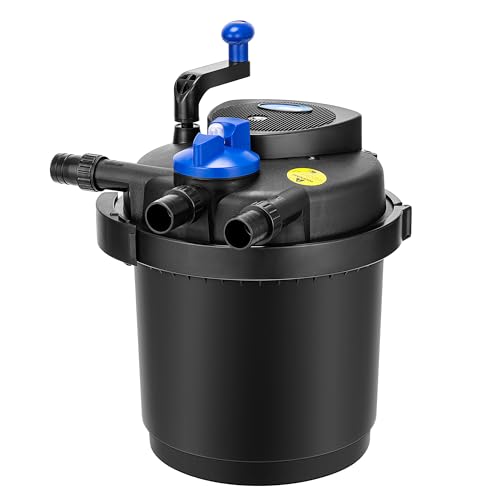
Best for koi and ornamental ponds needing robust filtration and easier maintenance. This 1580 GPH unit supports up to 800-gallon fish ponds or 1600 gallons ornamental ponds, pairing a multi-layer sponge filter system with a 13W clarifying lamp. It offers a backflush option for quick cleaning and a modular body for straightforward service. Use this if you want enhanced clarity and easier weekly maintenance; be mindful of the need for proper backflushing to maintain performance.
VIVOHOME 530 GPH Submersible Pond Filter

Best for ponds up to 920 gallons that benefit from a discreet, submersible setup. This model emphasizes durability with IPX8 waterproofing and a long 33-foot UL-listed power cord. It provides up to 2000 L/H flow, balancing water movement and filtration while serving as a centerpiece in smaller garden ponds. A limitation is that submersible units may require closer proximity to electrical outlets and careful cable management to avoid exposure to weather.
Biling Pond Filter with Fountain Kit
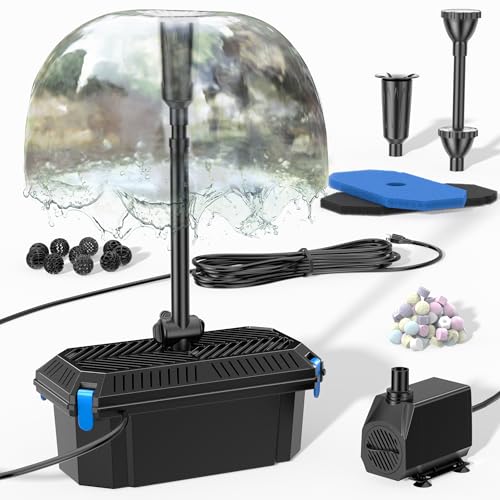
Better for garden ponds seeking a strong 660 GPH pump plus a three-nozzle fountain display. The all-in-one filtration system can handle up to about 1500 gallons and emphasizes safe filtration materials to protect fish. Choose this if you want a compact unit that integrates filtration and fountain features in one package. A note: ensure your pond depth accommodates the fountain height for optimal display.
AquaMiracle All-in-One Pond Filter

Best for smaller gardens needing flexible outputs and multiple spray choices. This 400 GPH pump supports 200–350 gallon ponds with four-layer filtration and a dual-output design for connecting additional features. It’s suitable for decorative and practical water features, including ponds integrated with bird baths or small streams. It may be limited by its lower flow rate for heavily stocked ponds or those requiring rapid turnover.
Buying Guide: Key Purchase Considerations
What size pond do you have? Match the filter/pump system to your pond’s volume to ensure adequate turnover and filtration. For koi ponds or heavily stocked water features, prioritize higher GPH and pressurized or multi-stage filtration.
Do you want an integrated fountain or multiple water features? Systems with built-in fountain kits or dual outputs can enhance aesthetics while keeping equipment centralized.
Is maintenance ease important? Look for backflush capabilities, modular components, and clearly accessible filters or sponges for quicker cleaning and lower maintenance time.
What about installation and space? Submersible units save surface space but require safe, dry power access. External or gravity-fed systems may need more plumbing but can simplify servicing.
Water quality goals: If you struggle with green water or odors, prioritize units with clarifying lamps, bio-media, and multi-layer filtration to promote beneficial bacteria and clearer water.
Frequently Asked Questions
- What size pond filter should I choose? Pick a filter rated for the pond’s volume, aiming for at least one turnover per hour, with higher turnover for koi or heavily planted ponds.
- Are pressurized filters better than gravity filters? Pressurized filters are easier to hide and backflush, while gravity-fed units may require more space but offer simple maintenance.
- Do I need a separate fountain pump? If you want a fountain or waterfall, choose a combined unit with a fountain kit or ensure an outlet is available for a dedicated feature pump.
- How often should I clean pond filters? Backflush or clean based on water clarity and debris load; typical maintenance ranges from weekly to monthly for active ponds.
- Can these filters handle koi waste? Yes, many are designed for koi or ornamental ponds, but ensure the unit’s GPH and media are rated for heavier waste loads.
- What maintenance materials are recommended? Use the included filter sponges, bio-media, and liners as prescribed; avoid chemical additives that may harm fish unless specifically recommended.