Best Reverse Osmosis System for Saltwater Aquarium: Top RO/DI Picks for Reef Tanks
Answering the question for reef keepers and hobbyists: a reliable RO/DI system is essential for creating and maintaining pristine saltwater aquarium water. These systems remove contaminants, reduce TDS, and produce high-purity water suitable for sensitive corals and invertebrates. The following selections cover a range of flow rates, stages, and portability, helping buyers find a model that fits tank size, maintenance style, and installation space. Best for enthusiasts seeking steady low-ppm water, and for professionals needing high-output filtration.
Summary table of the selected products:
- Aquatic Life Twist-In 4-Stage RO/DI – 75 GPD
- Aquatic Life RO Buddie 4-Stage – 50 GPD
- Aquatic Life 4-Stage RO/DI with Carbon Plus – 100 GPD
- 4-Stage Aquarium RO+DI with Flushing Valve – 100 GPD
- Max Water 6 Stage 100 GPD RO/DI
Aquatic Life Twist-In 4-Stage RO/DI System
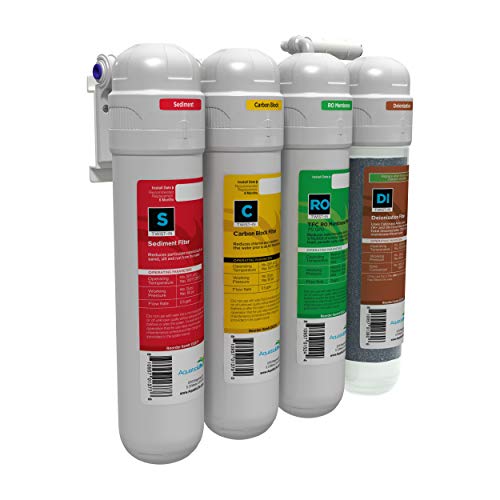
Best for hobbyists who want a compact, complete filtration setup. This 4-stage unit combines Sediment, Carbon, RO Membrane, and Color-Changing DI Resin to produce up to 75 gallons per day of purified water. It filters out dirt, sand, rust, and chlorine (chloramines are not removed). The high-efficiency RO membrane reduces total dissolved solids at a 1:10,000 ratio, providing water gentle enough for sensitive aquatic life.
- Best for: Small to medium saltwater tanks needing consistent, purified water.
- Why selected: Integrated 4-stage design with a clearly color-changing DI resin for easy DI status checks.
- Caution: Does not remove chloramines; plan to handle chloramines via alternative dosing or pre-treatment if your water supply uses chloramines.
Aquatic Life RO Buddie 4-Stage
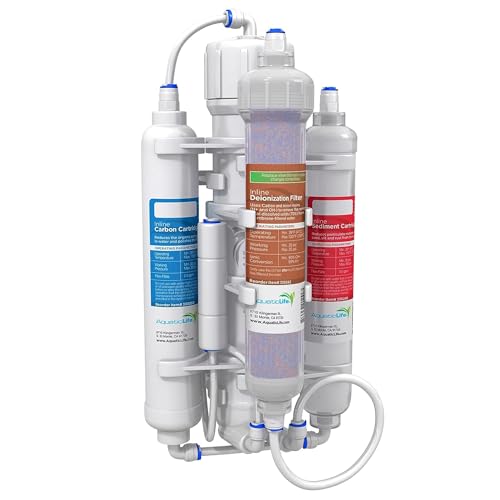
Best for compact setups and hobbyists who need reliable, space-efficient filtration. The RO Buddie 4-stage system uses sediment, carbon, RO/DI filtration to produce clean water for aquariums, fountains, and humidifiers. The sediment stage removes dirt and sand; the carbon stage reduces chlorine and odors, improving water safety for fish and plants (chloramines are not removed).
- Best for: Small fish tanks or decorative displays where space is limited.
- Why selected: Lightweight, easy to install, and adequate for smaller tanks requiring consistent water quality.
- Caution: Does not remove chloramines; consider additional treatment if your municipal water contains chloramines.
Aquatic Life 4-Stage RO/DI 100 GPD
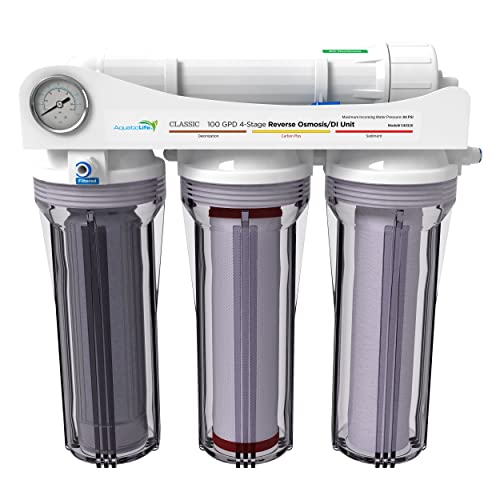
Best for reef tanks demanding higher output and robust filtration. This 4-stage system includes a sediment cartridge, Carbon Plus cartridge, 100 GPD membrane, and a refillable 10-inch color-changing resin DI cartridge for comprehensive purification. The Carbon Plus cartridge removes up to 98% of chloramines and 99% of chlorine, contributing to safer water for marine life.
- Best for: Medium to large reef tanks where higher daily output is beneficial.
- Why selected: Carbon Plus stage enhances chloramines removal for more stable water chemistry.
- Caution: Higher flow and more cartridges mean slightly more maintenance and space required.
4-Stage Aquarium RO+DI System With Flushing Valve
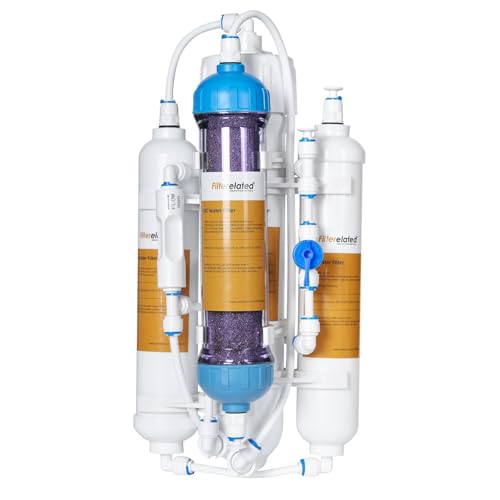
Best for users needing zero-ppm water and frequent water changes. This portable 4-stage system features a flushing valve and a color-changing DI resin. The stages include PP cotton, activated carbon, RO membrane, and DI resin. It targets TDS near 0 ppm and emphasizes quick cartridge replacement and easy rinsing during setup. Note the DI resin color change indicates resin exhaustion.
- Best for: Portable setups, apartments, or temporary installations requiring reliable RO water.
- Why selected: Flushing valve helps clear initial impurities during setup and maintenance.
- Caution: DI resin indicator requires replacement at color change for consistent TDS levels.
Max Water 6 Stage 100 GPD RO/DI

Best for serious aquarists and larger setups needing 100 GPD output and robust deionization. The Max Water 6-stage system removes a broad range of impurities after the DI stage, delivering water that is suitable for sensitive marine life. The system aims to reduce odors, lead, fluoride, and other contaminants, offering a comprehensive filtration path.
- Best for: Larger saltwater tanks or professional setups requiring higher production rates.
- Why selected: Six-stage design provides extensive filtration and improved water consistency.
- Caution: Higher complexity may demand more space and regular cartridge management.
Buying Guide: Key Considerations For Saltwater RO/DI Systems
- Water quality and contaminants: Assess whether your local water has chloramines, chlorine, or high TDS. Systems with Chloramine-removal (like Carbon Plus) are preferable in areas with chloraminated supply.
- Output needs: Match GPD (gallons per day) to tank size and weekly water-change volume. Reef tanks often benefit from higher GPD for flexibility.
- Filtration stages: More stages (RO membrane plus DI resin) reduce TDS to near zero. DI resin status indicators simplify maintenance.
- Space and installation: Consider footprint and whether a compact under-sink setup fits your cabinet or utility room. Portable models suit temporary setups.
- Maintenance and replacement: Plan for DI resin color indicators and filter replacement frequency. Confirm compatibility with standard 10-inch cartridges for easy sourcing.
- Plumbing and fittings: Quick-connect fittings and flushing valves simplify installation and ongoing maintenance, especially for beginners.
Frequently Asked Questions
- What does RO/DI stand for, and why is it used for saltwater aquariums?
– RO/DI combines reverse osmosis with deionization to reduce dissolved solids to near zero, protecting coral health and mineral balance. - Is a higher GPD always better?
– Higher GPD is beneficial for large tanks or frequent water changes, but can be overkill for small setups and may require more space and maintenance. - Do all RO systems remove chloramines?
– Not all do; some systems remove chlorine but not chloramines. If chloramines are present, ensure your system includes a chloramine-targeted stage or a separate treatment step. - How often should I replace DI resin?
– Resin life depends on water usage and incoming water quality. Indicators on resin cartridges help determine replacement timing. - Can I use RO water directly for my reef tank without buffering?
– In most cases, reef tanks require controlled salinity and buffering; use RO water as a base and monitor alkalinity and salinity before adding salt mix and live organisms.