Best RO/DI System for Saltwater Aquarium: Clean Water Made Easy for Hobbyists
Answering the saltwater aquarist’s need for consistent, reliable water with low TDS, this guide highlights five top RO/DI filtration systems. These units are best for hobbyists seeking dependable filtration, simple maintenance, and clear water for reef tanks, fish-only setups, and sensitive invertebrates. The top picks cover compact countertop models, tankless designs, and complete multi-stage systems. Use the quick comparison table below to pick the right fit for your setup and budget.
- Best for small to mid-size tanks needing simple installation
- Better for reef setups requiring low TDS and stable water chemistry
- Choose this if you want a compact system with easy DI resin indicators
- Avoid this if you need a tank-ready faucet and integrated storage tank
| Product | Stage Count | Max GPD | Best For |
|---|---|---|---|
| Aquatic Life RO Buddie 4-Stage | 4 | 50 | Small to mid tanks; good value |
| Aquatic Life Twist-In 4-Stage | 4 | 75 | Moderate tanks; easy DI changes |
| iSpring RCC1DP Tankless 5-Stage | 5 | 150 | High flow; compact footprint |
| Filterelated 4-Stage RO+DI | 4 | 100 | Residential or aquarium use; DI ready |
| Aquatic Life 4-Stage RO/DI With Carbon Plus | 4 | 100 | Balanced filtration; chlorine/chloramines control |
Aquatic Life RO Buddie 4-Stage RO/DI System
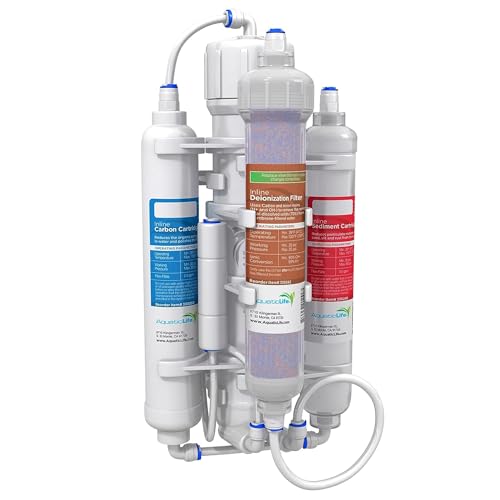
The Aquatic Life RO Buddie uses a four-stage filtration process to deliver clean, filtered water for aquariums, humidifiers, and decorative features. The sediment stage removes dirt and particulates, while the carbon block filter targets chlorine and odors to protect fish and plants. This unit is best for hobbyists seeking a straightforward, budget-friendly RO/DI setup for small to medium tanks. A notable limitation is that it does not remove chloramines, so users with chloramine-treated tap water may need additional treatment. Ideal for freshwater-style setups, reef hobbyists with softwater needs may want a different option.
Aquatic Life Twist-In 4-Stage RO/DI System
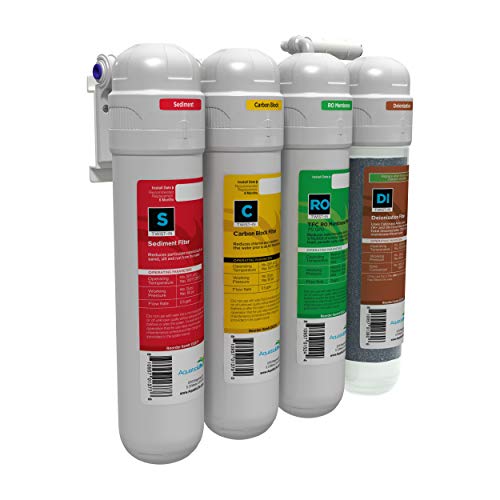
This twist-in model provides four stages—sediment, carbon, RO membrane, and DI resin—with a color-changing DI resin indicator. It delivers up to 75 GPD, making it better for moderate water needs. It removes dirt and chlorine well, but it does not remove chloramines, so plan accordingly if your water supply includes chloramines. This option suits hobbyists who want an easier cartridge replacement experience and reliable filtration without a tank, suitable for smaller reef setups or fish-only tanks.
iSpring RCC1DP Tankless RO/DI System

The RCC1DP is a tankless 5-stage system with a high-performance 150 GPD RO membrane and DI filtration. It emphasizes impurity removal across more than 1,000 contaminants, including lead and chlorine, and is designed for low-pressure environments with pump-assisted filtration. Best for aquariums that require rapid water production without an extra storage tank. A potential limitation is that installation may be more complex due to the integrated pump and tankless design; ensure compatibility with your space and water source.
Filterelated 4-Stage RO+DI System
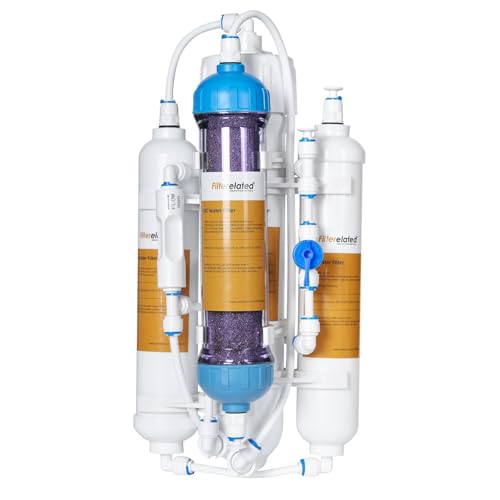
This 4-stage system blends RO filtration with a DI resin stage and includes a flushing valve for easy maintenance. It promises near-zero TDS output, and its quick-connect fittings simplify cartridge changes. It’s suitable for hobbyists who want predictable low-TDS water with an easy replacement cycle. The note to watch is the DI resin color-change indicator—when it shifts color, replacement is needed to maintain optimal filtration. Avoid if you need a built-in storage tank.
Aquatic Life 4-Stage RO/DI Filtration Unit With Carbon Plus
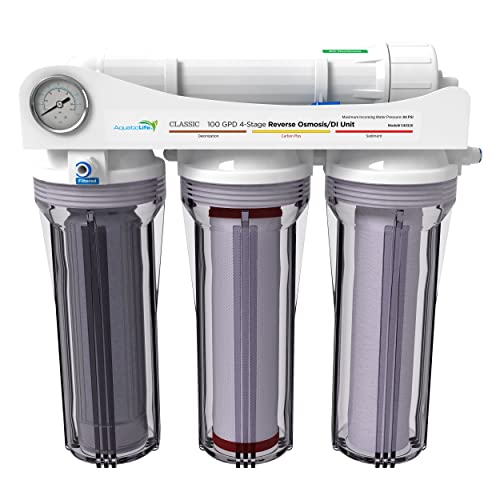
Designed for 100 GPD output, this four-stage system features a sediment filter, Carbon Plus cartridge, a 100 GPD RO membrane, and a refillable DI resin cartridge. The Carbon Plus stage targets up to 98% of chloramines and 99% of chlorine, helping protect sensitive aquatic life. Best for reef and fish-only tanks that benefit from stronger chloramine/chlorine reduction. A limitation is that chloramines are not always fully removed by all systems, so verify your water conditions before installation.
Buying Guide
Key purchase considerations for saltwater hobbyists:
- Water source and contaminants: Determine if your tap water contains chloramines, fluoride, or other contaminants to choose a system with suitable stages (sediment, carbon, RO membrane, and DI resin).
- GPD (gallons per day) needs: Larger tanks or higher water turnover require higher GPD. Tankless units excel in space-saving but may require more setup attention.
- Tank size compatibility: Small to mid tanks benefit from compact RO Buddie or Twist-In units; larger or high-turnover setups may justify 150 GPD systems like iSpring RCC1DP or RCC1D.
- Maintenance and DI resin: Look for color-changing DI resin indicators and clear replacement intervals to keep TDS consistently low.
- Space and mounting: Tankless and compact systems suit crowded setups; countertop or under-sink options work where space is limited.
FAQ
- What is RO/DI water used for in saltwater aquariums?
RO/DI water provides low-impurity water to maintain stable salinity, reduce algae blooms, and protect sensitive reef organisms.
- Do all systems remove chloramines?
No. Some systems remove chlorine but not chloramines. If your tap water contains chloramines, choose a unit with a DI stage or a system explicitly rated for chloramines removal.
- What does GPD mean, and why does it matter?
GPD stands for gallons per day. Higher GPD allows faster production of filtered water, which is useful for daily water changes or larger tanks.
- Is a tankless RO/DI system better than one with a storage tank?
Tankless designs save space and reduce reservoir maintenance but may require careful installation and adequate water pressure to perform optimally.
- How often should DI resin be replaced?
DI resin life depends on feed water quality and usage. Color-changing resin indicates when resin needs replacement to maintain near-zero TDS.
- Can I mix different brands of filters?
While mixing is possible, it’s generally best to use compatible stages within a single system to ensure consistent performance and warranty considerations.